PG 25 ... a couple of letters, a couple of numbers, a lot of impact on the data center cooling world.
As liquid cooling continues to surge to support greater rack densities and high-performance compute environments, liquid coolants are needed to protect all of those valuable components, as traditional air cooling isn't sufficient for their cooling needs.
In this article, we'll review:
- Why PG 25 coolant has become an industry standard for direct-to-chip (DTC/D2C) liquid cooling in data centers
- What goes into a PG 25 coolant
- Things for data center procurement professionals to think about when selecting a coolant
What is PG 25 Coolant?
PG 25 is a single-phase heat-transfer fluid composed of approximately 25% propylene glycol (C3H8O2) by volume, blended with high-purity water and a corrosion-inhibitor package. Propylene glycol is a clear, low-volatility organic compound recognized as Generally Recognized as Safe (GRAS) by the U.S. Food and Drug Administration when used in food, pharmaceutical, and cosmetic applications. The U.S. Agency for Toxic Substances and Disease Registry notes that propylene glycol has very low acute oral toxicity and is not classified as carcinogenic, mutagenic, or a reproductive toxicant.[1]
In a data center cooling loop, the propylene glycol acts primarily as a freeze-point depressant and biocide carrier; the water does the bulk of the thermal work. At a 25% concentration, the blend protects to roughly −10 °C (14 °F) — enough to ride out a winter facility shutdown without burst piping, while keeping viscosity and pumping power close to plain-water performance.[2] Going higher in glycol content (30–50%) provides more freeze margin but sacrifices specific heat and increases pressure drop, so PG 25 is generally regarded as the sweet spot for indoor secondary loops feeding cold plates and coolant distribution units (CDUs).[3]
The fluid is paired with an inhibitor system — typically a buffered package containing tolyltriazole for copper protection and other inhibitors for aluminum, like silicates — that prevents corrosion of the copper, brass, solder, aluminum, and stainless steel found inside cold plates and manifolds.[4]

PG 25 in Industry Guidelines
Two bodies dominate the technical guidance for data center cooling: ASHRAE Technical Committee 9.9 (Mission Critical Facilities) and the Open Compute Project (OCP). Both have converged on PG 25 as a reference fluid for single-phase, direct-to-chip cooling.
ASHRAE TC 9.9’s Liquid Cooling Guidelines for Datacom Equipment Centers (Datacom Series Book 4, 2nd Edition) lists water-glycol mixtures — predominantly propylene glycol — among the approved Technology Cooling System (TCS) fluids and emphasizes the use of CDUs to maintain a clean, conditioned secondary loop.[5] The 5th-edition Thermal Guidelines for Data Processing Environments (2021) further codifies facility-water classes (W17, W27, W32, W40, W45, W+), within which PG 25 secondary loops are routinely specified.[6]
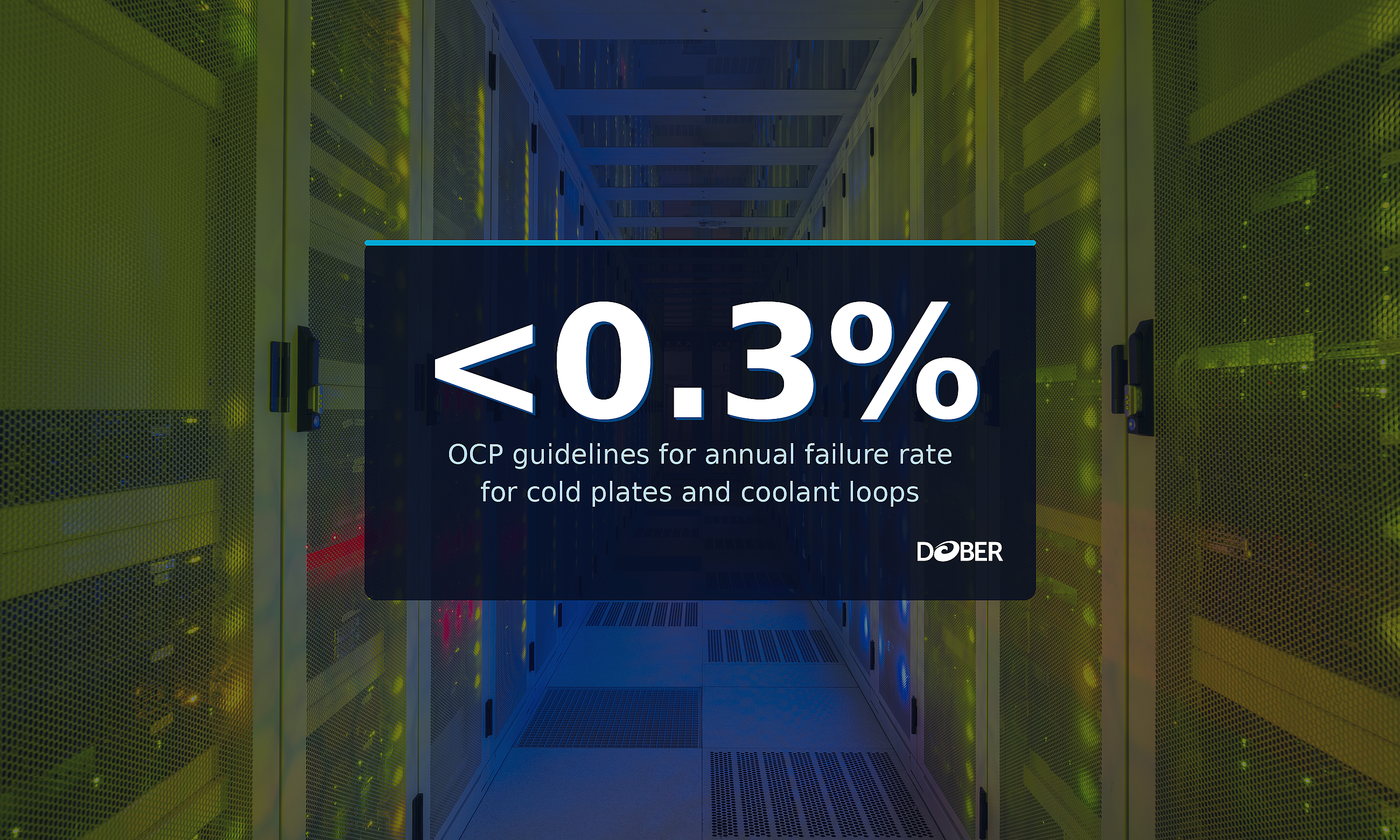
OCP’s Guidelines for Using Propylene Glycol-Based Heat Transfer Fluids in Single-Phase Cold Plate-Based Liquid Cooled Racks is the most explicit standard. It specifies wetted-material compatibility, manifold and tubing requirements, operating temperature and pressure ranges, filtration, and safety practices for PG 25 coolants — with the goal of enabling multi-vendor interoperability across IT refresh cycles.[7] OCP’s cold-plate reference design uses PG 25 properties to define a typical flow target of approximately 1.5 LPM/kW for a 10 °C temperature rise across the cold plate.[8]
National laboratories have taken the same direction in practice. The U.S. Department of Energy’s National Renewable Energy Laboratory (NREL) and Lawrence Berkeley National Laboratory’s Center of Expertise for Energy Efficiency in Data Centers operate and document warm-water, direct-liquid-cooled HPC systems that rely on glycol-water secondary loops. NREL’s ESIF data center has reported a power usage effectiveness (PUE) as low as 1.034 while capturing more than 95% of rack heat directly to liquid[9][10]. However, it should be noted that this is from a purpose-built HPC facility, and not likely to be a typical number in most facilities.
A growing peer-reviewed literature reinforces these specifications. Comparative testing of single-phase data-center coolants under ASTM D1384 and ASTM D8040 has documented uniform corrosion rates well under typical specification limits for properly inhibited PG 25 fluids on copper, brass, solder, and aluminum[4][11].
Benefits of PG 25 for Data Center Cooling Systems
The reason PG 25 has become the default solution for data center direct-to-chip cooling is a combination of safety, thermal performance, and operational simplicity.
Personnel and equipment safety
Unlike ethylene glycol, which is acutely toxic if ingested, propylene glycol is non-toxic at the concentrations used in HVAC and IT cooling loops[1]. That matters in a data center, where leaks can occur near energized hardware, inside white space, or in shared mechanical rooms. PG 25 also dyes easily, so even a small leak is obvious to a technician.
Corrosion control over the long haul
A buffered inhibitor package keeps the loop’s pH in the recommended 7.5–9.0 range and continuously passivates wetted metals, extending cold-plate life and protecting brazed joints and quick-disconnects[4].
Freeze and biological protection
The 25% glycol concentration depresses the freeze point to roughly −10 °C and suppresses microbial growth far more effectively than deionized water alone, reducing the risk of biofilm-driven flow restriction inside micro-channel cold plates[2].
Predictable thermal hydraulics
PG 25’s specific heat and viscosity are well characterized, allowing CDU and pump sizing to be done from published property tables rather than from vendor-specific data[7][11].
Standards alignment
Specifying PG 25 means specifying a fluid that ASHRAE, OCP, and DOE-funded research programs have already vetted. That fact simplifies internal review, AHJ approval, and IT vendor warranty conversations[7].
Other Considerations Before You Specify a Coolant
Beyond the chemistry name, sophisticated buyers should also evaluate:
- The corrosion-inhibitor package’s certified performance under ASTM D1384, D8040, and D3306, ideally with third-party test data[4].
- Material compatibility with every metal and elastomer in the loop, including quick-disconnects and EPDM/NBR seals[7].
- Compliance of the inhibitor and any biocides with regional environmental and wastewater regulations for end-of-life disposal[7].
- The ASHRAE facility-water class (W17–W+) the secondary loop must support, and the resulting CDU approach temperatures[6].
- Supply-chain considerations: pre-diluted fluid versus concentrate, blending water quality, and global availability across the data center fleet.

---
Dober formulates COOLWAVE™ DC-25, a PG 25-class heat-transfer fluid recognized under the OCP Inspired™ program. If you are evaluating coolants for a new or retrofit liquid-cooling deployment, our chemistry team is available to review your specification, water source, and material list and recommend a fluid-and-inhibitor system that aligns with the standards above.
REFERENCES