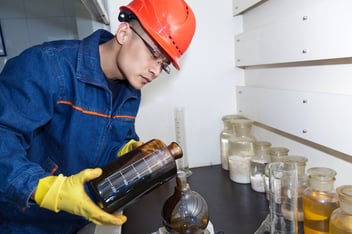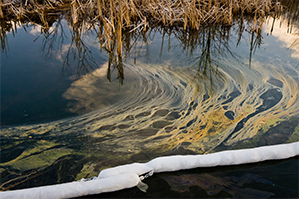
Oil and water separation is a critical wastewater treatment step in a number of industries, from oil and gas to food and beverage.
There are a number of reasons why oil and water separation is important in the oil and gas industry:
-
- Meeting oil export specifications
- Environmental regulation compliance
- Water reuse (i.e., better sustainability)
- Protection of downstream equipment
- Responsible stewardship of the surrounding environment
And that's just to name a few.
What Does Oil-Water Separation in Oil and Gas Do?
Oil-water separation is a cornerstone of effective water management in the oil and gas industry. Across upstream, midstream, and downstream operations, managing produced water and process wastewater is essential for environmental compliance, operational efficiency, and cost control.
What's in Oilfield Produced Water?
Produced water in this context can be a complicated mix (so, when we refer to separating oil from water, it's slightly more complicated than that). As Amakiri et al note in Table 3 of a review published in the journal Chemosphere, below are some of the primary constituents of oilfield produced water1:
-
- Dissolved organic compounds, like PAHs (polyaromatic hydrocarbons), organic acids, BTEX (benzene, toluene, ethylbenzene, and xylenes) and phenol
- Dissolved minerals and heavy metals
- Produced solids
- Treatment chemicals
- Oil and grease
- Dissolved gases, like hydrogen sulfide, carbon dioxide, and oxygen
In short, it's quite a mix, which means an effective produced water treatment plan is going to have a number of steps and feature a variety of strategies to get the job done.
Upstream Operations
In upstream operations, large volumes of produced water are generated during drilling and extraction. This water contains dispersed and dissolved hydrocarbons, suspended solids, and treatment chemicals. Effective primary separation, which often uses gravity separators, free-water knockouts, and API separators, removes bulk oil. Secondary processes such as hydrocyclones, induced gas flotation (IGF), and dissolved air flotation (DAF) systems further reduce oil-in-water concentrations. At this stage, efficient separation protects reinjection systems, reduces disposal costs, and ensures compliance with discharge regulations.
Midstream Operations
Moving into the midstream sector, oil-water separation continues to play a key role in pipeline transport and storage terminals. Condensate recovery units and tank drainage systems must handle slop oil and contaminated stormwater. Skimming systems, coalescing plate separators, and polishing filters are used to prevent hydrocarbon carryover. Proper separation minimizes corrosion, protects infrastructure, and reduces the risk of environmental incidents during transport and storage.
Downstream Operations
In downstream refining and petrochemical facilities, wastewater streams become more complex. Refinery effluent may contain emulsified oils, surfactants, phenols, and fine solids. Multistage treatment trains are common, starting with API separators, followed by dissolved air or induced gas flotation, biological treatment, and tertiary polishing such as media filtration or membrane systems. Effective oil-water separation at the front end is critical to prevent fouling and upset conditions in biological units and advanced treatment technologies.
Across all sectors, robust oil-water separation enhances water reuse opportunities, reduces environmental impact, and supports regulatory compliance. As water stewardship becomes increasingly important, advanced separation technologies and optimized treatment systems are vital to ensuring sustainable and responsible oil and gas operations.


Oil-Water Separation Methods
Below is a list of ways oil and gas operators separate oil and water. It should be noted, of course, that water treatment in oil and gas is a multistep process featuring primary, secondary and tertiary treatment steps along the way.
API Oil–Water Separators
Primary gravity-based units that remove large volumes of free oil and suspended solids using density differences, serving as first-stage treatment in produced water systems.
Dissolved Air Flotation (DAF)
Secondary treatment that injects micro-bubbles to carry fine oil droplets and solids to the surface for skimming, improving effluent clarity.
Induced Gas Flotation (IGF)
Similar to DAF but uses gas bubbles (often nitrogen) to float contaminants; widely used in refinery and petrochemical wastewater.
Hydrocyclones
Centrifugal separators that exploit density and centrifugal forces to rapidly de-oil water, ideal for compact and robust produced water treatment.
Filtration (NutShell & Media Filters)
Media beds (e.g., walnut shell) capture oils and solids after primary separation to further polish wastewater.
Membrane Filtration
Technologies like reverse osmosis remove dissolved salts and fine contaminants, often in tertiary treatment for reuse/discharge requirements.
Adsorption & Chemical Treatment
Activated carbon or chemical oxidation/precipitation targets dissolved organics, heavy metals, and specific pollutants post-coarse treatment.
Biological Processes
Aerobic/anaerobic systems use microbes to break down organic pollutants, typically as part of advanced tertiary treatment.
What are the top things oil and gas operators should consider when separating oil and water?
Influent Water Characteristics
Produced water composition varies significantly by reservoir and operation stage. As such, there's no one-size-fits-all solution or method. Operators must understand oil droplet size distribution, emulsification level, solids loading, salinity, temperature, and chemical additives. These factors directly influence separator selection, sizing, and performance expectations.
Regulatory Compliance Requirements
Discharge or reinjection standards dictate allowable oil-in-water concentrations. As an example, CFR regulations covering oil and grease levels in produced water on any one day to not exceed 42mg/L, with the average daily value over 30 days not exceeding 29mg/L5. Designing for current and anticipated regulations ensures long-term compliance, avoids penalties, and prevents costly retrofits.
Separation Technology Selection & Staging
No single technology solves all separation challenges. Effective systems often combine gravity separation, hydrocyclones, flotation, filtration, or membranes. Matching technology to droplet size and contaminant type is critical for efficiency and cost control.
Operational Stability & Maintenance
Separator performance can degrade due to fouling, solids buildup, scaling, corrosion, or emulsion formation. Operators should prioritize ease of maintenance, chemical optimization, sludge handling, and system monitoring to maintain consistent performance over time.
Lifecycle Cost & Water Reuse Strategy
Beyond capital expense, consider energy consumption, chemical usage, waste disposal, downtime risk, and scalability. Increasingly, operators evaluate oil-water separation as part of a broader water reuse and sustainability strategy to reduce freshwater demand and disposal volumes.
Developments in oil-water separation
So, what's next?
As wells mature and conditions change, oilfield operators have to be aware of updates in technology and chemistry to be able to have the best treatment program possible. Below are a couple of examples outlined in literature on the subject.
Natural Adsorbents
For a broader view of how operator reduce production at the well itself, Table 6 of a 2024 review in the Journal of Petroleum Production and Exploration Technology (Seifi et al.) catalogs field results from gel treatments, polymer injection, and mechanical plugs. Those interventions address water at the reservoir rather than downstream separation, but they shape the volume and character of what arrives at the treatment plant.
A useful summary of oil-water separation techniques published in the journal Polymers references natural biomass adsorbents2:
"Derived predominantly from renewable resources, they are both environmentally friendly and biodegradable. Upon disposal, they decompose into harmless substances, such as carbon dioxide and water, without causing secondary environmental pollution. Additionally, bioadsorbents are often more cost-effective due to the abundant and readily accessible nature of their raw materials. As a result, the use of natural biomaterials for oil–water separation has attracted significant attention in recent years. These adsorbent materials are primarily obtained from biomass sources, including cellulose, chitosan, lignin, and others."
Use of biopolymers has gained interest in a number of other fields, too, from medical to packaging and beyond.
Membranes
The same review by Jiang et al also touches on membrane technology, summarizing common membrane materials, including:
-
- Metal-based
- Inorganic non-metallic substrate filter
- Polymer filter membranes
Regarding polymer filter membranes, the research team contrasted membranes made from modified natural polymers against those made from synthetic polymers:
Filter membranes produced from modified natural polymers offer benefits such as biodegradability, environmental sustainability, wide availability, and low cost. In contrast to synthetic polymer membranes, which are non-biodegradable and can enter the human body through the food chain, posing potential health risks, natural polymers present greater research value in terms of both environmental impact and human health.
They also added, regarding cellulose:
Compared with the membrane materials mentioned earlier, cellulose-based membranes offer distinct advantages, including lighter weight, greater flexibility, lower cost, easier processing, and enhanced renewability. Additionally, they are environmentally friendly and biodegradable. These characteristics make cellulose-based materials highly promising as alternatives to metal and synthetic polymer substrates in the field of oil–water separation.
On the other hand, the paper cites challenges with bacterial cellulose membranes vis-à-vis low porosity, concluding there is an "urgent need for researchers to identify polymer membranes with anti-fouling and/or antibacterial properties to enhance industrial wastewater purification."
Elsewhere, a review of super-hydrophilic, underwater super-oleophobic membranes with photocatalytic self-cleaning properties (Alshabib et al.) is also worth tracking. The authors note that oil clogging is the central constraint on oil-passing membranes, and that photocatalytic coatings are being studied as a way to restore membrane function.3
In short, operators in the space should continue to keep tabs on research and development respective to various stages of oil-water separation in order to have the most effective program possible. While it can be difficult to change longstanding ways of doing things, it's important to know what's out there (and even what research is being done).
Oil and Water Separation: A Case Study
It's one thing to talk about these processes on paper ... it's another to see them out in the field.
In a Dober case study conducted at one U.S. refinery, a Dober product (GFT 6173) was tested onsite to see how it compared with the incumbent synthetic chemical (a polyDADMAC/PAC blend).
The results were as follows:
-
Reduced the Aeration Inlet COD by 20%
-
Oil/grease reduced by 44%
- The refinery’s quarterly chemical spending was reduced by 18%
A useful summary of oil-water separation case studies from around the world can also be found in Table 6 of a 2024 study published in the Journal of Petroleum Exploration and Production Technology (Seifi et al)4.
Conclusion
Bottom line? Among many other factors, choosing your chemistry is a critical component of your oil-water separation arsenal. Furthermore, bio-based coagulants can match or beat conventional synthetic chemistry in the right application. At the refinery above, a GreenFloc natural coagulant outperformed the incumbent polyDADMAC/PAC blend on both effluent quality and cost. Sustainability and performance do not have to be an either/or proposition.
Interested in speaking to a Dober expert to chat about how GreenFloc products can help you with your oil-water separation needs?


References
1. Kingsley Tamunokuro Amakiri, Anyela Ramirez Canon, Marco Molinari, Athanasios Angelis-Dimakis, Review of oilfield produced water treatment technologies, Chemosphere, Volume 298, 2022, 134064,
ISSN 0045-6535, https://doi.org/10.1016/j.chemosphere.2022.134064. (https://www.sciencedirect.com/science/article/pii/S0045653522005574)
2. Jiang J, Wan S, Wen C, Tang L, Xu N. Frontiers in Innovative Materials and Technologies for Oil–Water Separation. Polymers. 2025; 17(12):1635. https://doi.org/10.3390/polym17121635
3. Muntathir Alshabib, Umair Baig, M.A. Dastageer, Super-hydrophilic and underwater super-oleophobic membranes with photocatalytic self-cleaning properties for highly efficient oil-water separation: A review, Desalination, Volume 591, 2024, 118019, ISSN 0011-9164, https://doi.org/10.1016/j.desal.2024.118019. (https://www.sciencedirect.com/science/article/pii/S0011916424007306)
4. Seifi, F., Haghighat, F., Nikravesh, H. et al. Using new chemical methods to control water production in oil reservoirs: comparison of mechanical and chemical methods. J Petrol Explor Prod Technol 14, 2617–2655 (2024). https://doi.org/10.1007/s13202-024-01844-1