pTitanium dioxide (TiO2) shows up in more products than most people realize, from sunscreens to tablet coatings to lotions. That popularity comes with a downside for the manufacturers who make them: TiO2 is notoriously difficult to remove from processing equipment.

Our updated guide, "A Guide to Cleaning Products Containing Titanium Dioxide," walks through why TiO2 resists cleaning and how to get it right the first time.
Here's a quick preview:
WHAT IS TITANIUM DIOXIDE?
Titanium dioxide is an inorganic, white crystalline metal oxide prized for its whiteness, opacity, chemical stability, and ability to block UV light. It shows up as an excipient in pharmaceutical tablets, an active ingredient in sunscreens, and a color agent in lotions, creams, and cosmetics. That same chemical inertness that makes it valuable in a formulation is exactly what makes it stubborn once it's stuck to a piece of equipment.
WHY IS CLEANING TITANIUM DIOXIDE SO DIFFICULT?
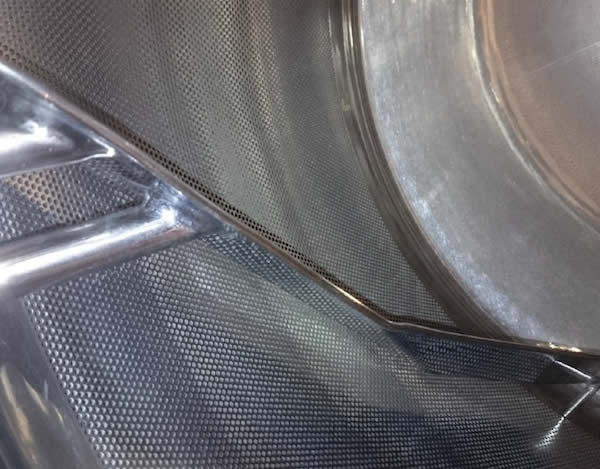
TiO2 doesn't dissolve, so rinsing alone tends to spread it rather than remove it. Its extremely fine particle size carries an electrostatic charge that draws it to stainless steel, and it readily agglomerates during granulation, coating, and high-shear mixing into a dense, ceramic-like film. The result is a white haze that survives a standard wash cycle and only becomes obvious after the equipment is supposed to be clean.
WHAT PRODUCTS ARE BEST FOR CLEANING TITANIUM DIOXIDE?
The most effective detergents combine four mechanisms: alkalinity to break down organics, surfactants to lift embedded particles, dispersants to keep TiO2 suspended, and chelators to boost overall performance. Off-the-shelf alkaline or acidic cleaners, and shortcuts like hydrogen peroxide, may clear the haze temporarily, but hydrogen peroxide oxidizes stainless steel over time and adds a new maintenance problem. Since TiO2 can't be dissolved, the goal is keeping particles suspended long enough to rinse them away completely.
HOW DO YOU PROPERLY CLEAN TITANIUM DIOXIDE FROM EQUIPMENT?
Properly cleaning TiO2 means targeting the entire product formulation, not just the pigment, and pairing the right detergent with a cleaning process built around your specific equipment. Swapping in a better detergent without adjusting dose, temperature, or dwell time still leaves haze behind. Partnering with a cleaning specialist to test your actual soil under lab conditions is the fastest way to land on a validated, repeatable process instead of trial and error on the plant floor.
GET THE FULL GUIDE
Our full guide covers all of this in more depth, including a framework for finding your solution and what to expect from a Custom Cleaning Evaluation (CCE) with Dober's Chematic team. Download *A Guide to Cleaning Products Containing Titanium Dioxide* to stop re-cleaning and start protecting your uptime.