Success in growing winter wheat or other cereal grains comes down to proper planning and risk management. While weather is out of the farmer’s control, many management decisions can be manipulated by the grower to maximize yield performance.
Maximizing Yields in Winter Cereals Requires Planning
One of the most important choices is varietal selection. Dependent on geography, it is critical to plant a variety having the correct relative maturity, winter hardiness score, and yield stability coupled with lodging and pest resistance or tolerances. Genetics definitely matter!
Field preparation is equally important. Less tillage coupled with seeding into existing stubble helps conserve moisture, which is critical to germination and seedling establishment. Getting the crop off to a vigorous start is an essential part of the yield game.
Planting dates can vary by geography but generally occur from September to early October and should occur early enough to allow the crop 8 to 12 weeks of development before exposure to sub-freezing temperatures. This allows for optimal vernalization and full development of winter hardiness and ultimately reduces winter kill, a big factor in reducing yield.
Depending on locale, growers should consult their local land-grant university for other agronomic tips like soil pH management, planting rate, planting depth, weed control options, pest thresholds, and other factors.
Improve Nutrient Use Efficiency
Winter cereals require adequate and balanced fertility to maximize yield. The following chart, courtesy of AgPhD.com, shows the nutrients needed to produce 100 bushel of winter wheat.1
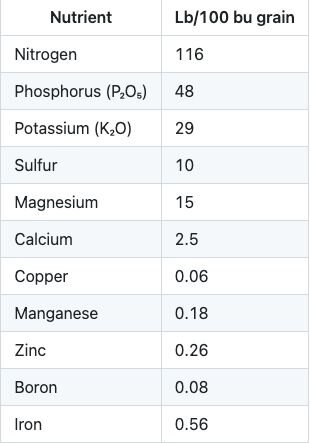
It is obvious that both macro- and micronutrients are critical for winter cereal production; they just differ in the relative amounts needed to best feed the plant. And remember that nutrients are subject to loss by air and water, as well as being tied up in the soil.
Enter Soltellus™. Through its novel polyaspartate polymer structure, its Cation Exchange Capacity (CEC) score of 100, and its unique chelation, ion-bridging and nutrient release properties, Soltellus™ helps keep nutrients in the root zone longer offering a prolonged opportunity for plant uptake. This increases nutrient use efficiency for every dollar spent on fertilizer.
Feed the Microbiome, Too
The best way to stimulate the soil microbiome is to adequately feed the plant. A well-fed plant produces maximal amounts of root exudates and this feeds and stimulates the microbes, leading to all sorts of positive effects:
-
- Better nutrient cycling
- Enhanced soil health, structure and organic matter content
- Greater plant-microbe signaling and plant stress mitigation effects
- Better water holding capacity and retention
Using Soltellus™ on the winter cereal acre benefits the plants and microbiome, which is a winning combination. And due to its complete biodegradability by microbes, it breaks down totally into nitrogen and carbon components to further benefit both populations without producing residues or microplastics.
Have questions about how Soltellus™ fits into your operation, or want to speak with a member of our agronomy team? Contact us today to start the conversation.
Sources: